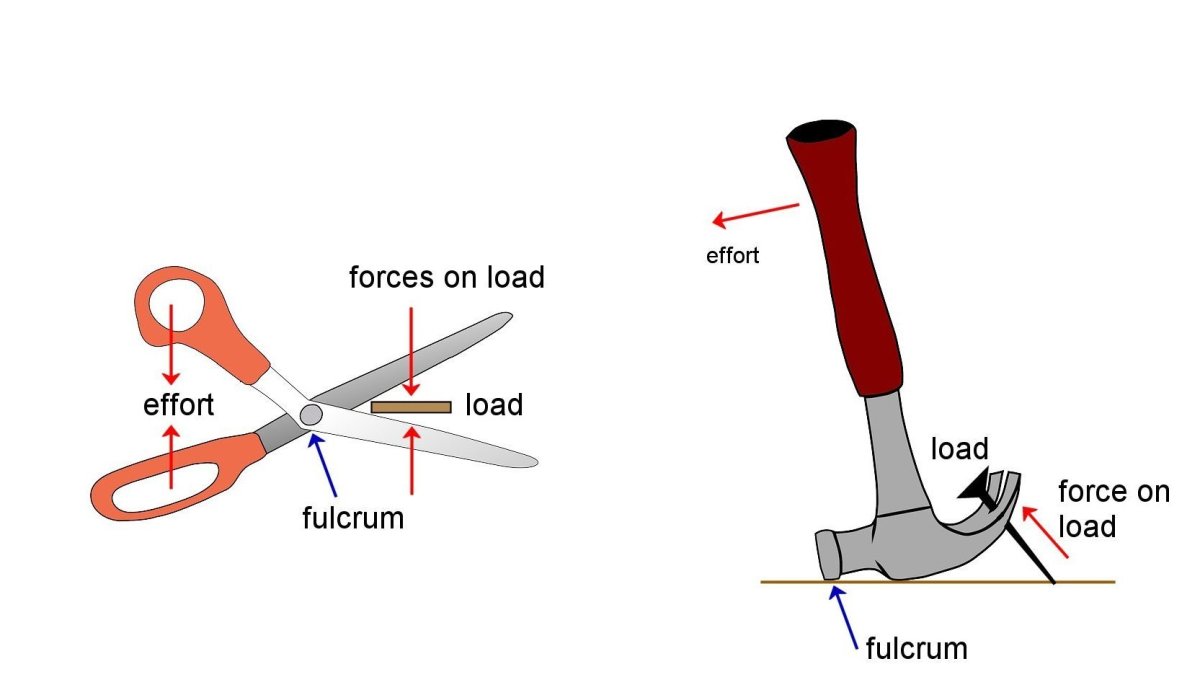
Source: Owlcation.com
Levers are fascinating mechanical devices that have played a significant role in human history. These simple machines have been used for thousands of years to make our lives easier and more efficient. From basic tools like seesaws and crowbars to more complex machinery like cranes and lifts, levers are present in various aspects of our daily lives.
In this article, we will explore 18 fun facts about levers that will not only amaze you but also give you a deeper understanding of how these ingenious creations work. Whether you are a science enthusiast, a curious learner, or simply someone interested in the mechanics of everyday objects, these facts will surely captivate your attention. So, let’s dive into the world of levers and discover some intriguing tidbits about these remarkable devices!
Key Takeaways:
- Levers are simple machines that make tasks easier by amplifying force and changing the direction of force. They are used in everyday life, sports, engineering, and even in the human body.
- The length of a lever and the position of the fulcrum can affect its mechanical advantage, allowing for different levels of force amplification. Levers are essential in various fields, from construction to medicine.
A lever is a simple machine.
A lever is a basic mechanical device consisting of a rigid bar that rotates around a fixed point called a fulcrum.
There are three types of levers.
The three types of levers are classified based on the position of the fulcrum, load, and effort. They are the first-class, second-class, and third-class levers.
Levers can be found everywhere.
From seesaws in playgrounds to scissors and crowbars, levers are widely used in everyday life to make tasks easier.
Archimedes is credited with the discovery of the lever.
Archimedes, the famous Greek mathematician and inventor, is often credited with discovering the principles of levers in the third century BC.
Levers are used in various sports.
Athletes in sports such as weightlifting, rowing, and javelin throwing utilize levers to enhance their performance and generate maximum force.
The human body contains levers.
Our musculoskeletal system functions using levers. For example, our arms act as levers when we lift objects or perform physical movements.
Levers can amplify force.
By using a lever, a smaller input force can be used to apply a larger output force, allowing for mechanical advantage.
A crowbar is a classic example of a lever.
A crowbar is a simple machine that utilizes the principle of a lever to exert a greater force when prying objects apart.
Levers are used in engineering and construction.
Engineers and construction workers rely on levers to move heavy objects, operate machinery, and perform various tasks in their respective fields.
Levers have been used for thousands of years.
The concept of levers has been known and utilized by civilizations since ancient times, dating back to the Stone Age.
Levers can change the direction of force.
Depending on the position of the fulcrum, a lever can alter the direction of the applied force, making it useful in various applications.
Levers can be balanced.
By adjusting the position of the load and effort, it is possible to achieve balance in a lever system, allowing for easier manipulation.
The lever principle is utilized in hydraulic systems.
Hydraulic systems often use levers to control fluid pressure and manipulate mechanical components, making them essential in various industries.
Levers contributed to the Industrial Revolution.
The invention and utilization of levers played a significant role in the advancements of technology during the Industrial Revolution.
Levers are used in medicine.
Surgeons use specialized levers and instruments during surgical procedures to perform delicate and precise actions with minimal tissue damage.
Levers can be found in musical instruments.
Pianos, guitars, and other string instruments use levers to amplify the sound produced by the vibration of the strings.
The length of the lever affects its mechanical advantage.
By altering the length of the lever arms, the mechanical advantage can be adjusted, allowing for different levels of force amplification.
Levers are governed by the principle of torque.
The rotational force called torque is the driving factor behind the operation of levers, determining their efficiency and effectiveness.
To help keep this blog free, we use sponsorships from other websites instead of annoying advertisements; would be helpful if you click on any of these:
InsightsHub


Comments
Post a Comment